0-1 Year Baby Toys Guide: First Steps in Supporting Development
Which toy is right for your baby's first year? A comprehensive guide to safe toy selection that supports sensory, motor, and cognitive development for 0-1 year old babies.
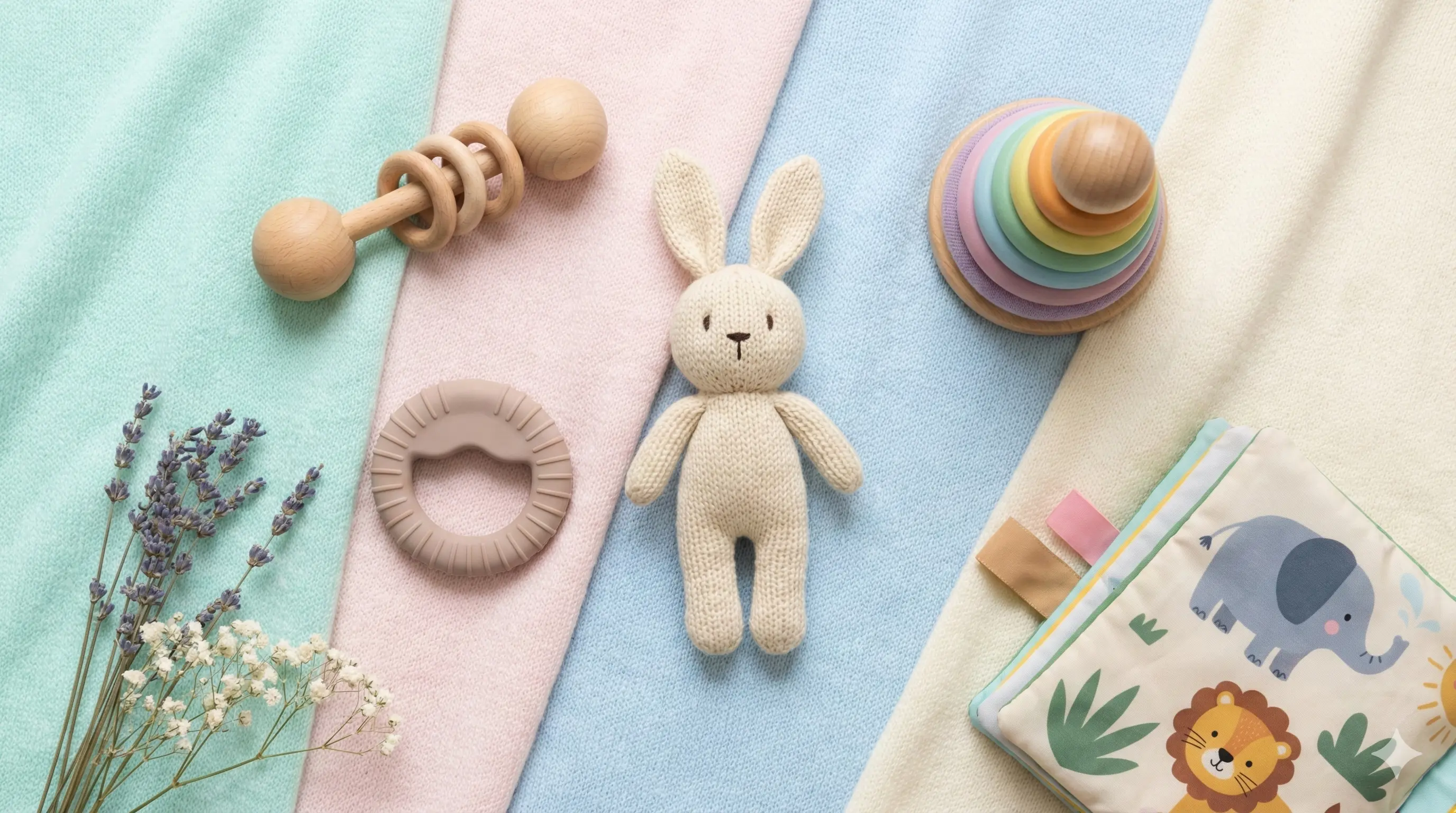
0-1 Year Baby Toys Guide: Developmental Support Choices
Babies begin their journey of exploring the world from the moment they are born. The first 12 months represent the period of fastest physical and mental development in human life. Parents often wonder, “They’re still so young, can they really understand toys?” The answer is: Yes, absolutely! But with the right toy…
In this guide, we’ll examine safe and educational toy categories suitable for your baby’s month-by-month development in detail.
Baby Development and the Role of Toys
80% of brain development is completed in the first 3 years, and during this time babies learn from stimuli they receive from their environment. Toys are one of the most important sources of these stimuli. A well-chosen toy:
- Supports sensory development (seeing, hearing, touching)
- Develops motor skills (grasping, holding, releasing)
- Contributes to cognitive development (cause and effect relationships)
- Strengthens emotional bonds (interaction with parents)
0-3 Months: Visual and Auditory Awakening Period
Newborn babies cannot yet grasp objects and their visual range is limited (approximately 20-30 cm or 8-12 inches). The world is a blurry place for them at this stage. However, the brain is developing rapidly and every stimulus from the environment is important.
Characteristics of This Period
- Babies see high-contrast colors (especially black and white) more clearly
- They are sensitive to sounds and try to look toward the sound source
- They show great interest in faces
- Reflex movements dominate; conscious grasping has not yet developed
Best Choices for This Period
Mobiles
Slow-moving, music-playing mobiles hung above the crib develop the baby’s focusing ability. Babies try to follow moving objects with their eyes, which strengthens their eye muscles.
Tip: Place the mobile at a distance the baby can see (approximately 25-30 cm or 10-12 inches). If it’s too far, the baby won’t see it clearly.
Black and White Contrast Cards
Contrasting colors are wonderful for babies’ retinal development. Cards containing geometric shapes, facial expressions, or simple patterns stimulate visual perception. Research shows that high-contrast images can hold a newborn’s attention up to 3 times longer than soft, muted colors.
Soft Fabric Toys
Soft toys that make rustling sounds when placed next to the baby stimulate auditory perception. When the baby turns their head or waves their arm and hears the sound, they gradually connect this movement to the sound.
Mirror Toys
Babies find reflections fascinating. Unbreakable, baby-safe mirrors provide visual stimulation and take the first steps toward self-awareness. By 4-5 months, babies begin to recognize that the reflection is themselves.
3-6 Months: Grasping and Exploring Period
Your baby has now discovered their hands! They begin to reach for objects, grab them, and most importantly, put them in their mouth. During this period, “safety” and “hygiene” are the most critical concerns.
Characteristics of This Period
- Conscious grasping begins
- Everything goes into the mouth (oral exploration period)
- They begin turning from supine position to side
- Sounds become more meaningful
- First clues of cause-and-effect relationships appear
Featured Toys
Rattles
Rattles instill in the baby the idea “When I shake this, it makes a sound.” This is the first cause-and-effect relationship they learn.
Selection criteria:
- Should be lightweight (baby can easily hold it)
- Handle should be thin (suitable for small hands)
- Should have soft edges
- Should be made from BPA-free plastic
Teethers
From 3-4 months, gums begin to itch. Teethers make this period easier for both baby and parent.
What to look for:
- Material free from BPA, PVC, and phthalates
- Different textures (bumpy, smooth, raised)
- Models that can be cooled (refrigerator-safe)
- Easy-to-grasp design
Play Mats and Gym Centers
Colorful mats with toys are ideal for spending time on their back or on their tummy (tummy time).
Why is tummy time important?
- Strengthens neck muscles
- Prepares for sitting and crawling
- Prevents flat head syndrome (plagiocephaly)
- Offers a different perspective
Fabric Books
Soft, washable fabric books with different textures can be introduced during this period. The baby grasps the pages, crumples them, and of course, puts them in their mouth.
6-9 Months: Sitting and Object Manipulation Period
Babies can now sit unsupported and use both hands in a coordinated manner. This is the peak time for toy interaction.
Characteristics of This Period
- Unsupported sitting begins
- Objects are transferred from one hand to the other
- The concept of “object permanence” begins to develop (objects that disappear from sight still exist)
- First babbling sounds emerge (ba-ba, ma-ma)
- Stranger anxiety may begin
Toys for This Period
Nesting Cups and Towers
Simple plastic towers or cups are used for both stacking and knocking down. For this age group, knocking down is more fun than stacking!
Developmental benefits:
- Size concept (big-small)
- Hand-eye coordination
- Cause-effect (if I stack, it falls)
- Patience and focus
Bath Toys
Since babies can sit, bath time is now playtime.
Recommended types:
- Buckets and strainers that fill and empty water
- Floating plastic animals
- Stick-on bath books
- Water mill toys
Hygiene warning: Clean bath toys regularly and make sure no water remains inside. They can create an ideal environment for mold growth.
Musical Instruments
Simple drums, maracas, or xylophone-like toys stimulate musical intelligence and develop a sense of rhythm.
Soft Balls
Soft balls with easy-to-grasp, different textures are ideal for discovering rolling.
9-12 Months: Movement and Problem-Solving Period
This is the period when crawling and first steps begin. Babies are now “active” players eager to explore the world.
Characteristics of This Period
- Crawling and scooting
- Pulling up to stand while holding on
- First steps (usually around 12 months)
- Pointing with index finger
- Understanding simple commands
- Imitation behavior
Toys for This Period
First Step Friends (Walker Toys)
Wheeled toys that are pushed or pulled encourage walking and provide balance.
Caution: Push walkers are preferred over sit-in walkers (baby walkers). Sit-in walkers increase accident risk and can negatively affect natural walking development.
Activity Tables with Buttons and Music
Toys that light up or make sounds when buttons are pressed develop fine motor skills (finger use).
Features to look for:
- Various button types (press, turn, slide)
- Different sounds and melodies
- Bright colors and lights
- Sturdy, tip-resistant design
Simple Puzzles
Wooden or plastic puzzles with 2-3 pieces and large holding knobs lay the foundation for problem-solving skills.
Pull-Along Toys
Wheeled animals that move when the string is pulled or that are dragged behind encourage walking and reinforce cause-and-effect relationships.
Safety-First Selection Criteria
Material Safety
- Should not contain BPA: Bisphenol A can cause hormonal imbalance
- Should not contain phthalates: Plastic softeners pose health risks
- Lead-free paint: Painted toys should not contain lead
- CE mark: Compliance with European safety standards
Physical Safety
- No small parts: No swallowable parts should be present
- No sharp edges: All edges should be rounded
- Sturdy assembly: Parts like eyes and buttons should not come off
- Appropriate size: Should not fit entirely in the baby’s mouth
Hygiene
- Easy to clean: Should be washable or wipeable
- Quick-drying: Prevents bacterial growth
- Odorless: Should not have a heavy chemical smell
Frequently Asked Questions
1. What is the most important criterion for 0-1 year toys? Safety. It is essential that they do not contain small parts that can be swallowed, bear the CE mark, and are made from BPA-free materials.
2. How often should I clean toys? Since everything goes into the mouth during this period, toys should be cleaned frequently. You can wipe plastic toys with warm soapy water and wash silicone ones in the dishwasher (top rack).
3. Is it necessary to buy too many toys? No. What matters for babies is not the quantity but the variety and quality of toys. A few toys with different textures, sounds, and functions are sufficient. Too many toys can cause overstimulation.
4. Are electronic toys harmful? They’re not harmful, but they’re not necessary for this age group either. Simple, mechanical toys encourage more active participation from the baby. Electronic toys can turn babies into passive observers.
5. Can second-hand toys be purchased? They can be purchased after hygiene and safety checks. However, it is recommended that toys that go into the mouth, such as rattles and teethers, be new.
Conclusion
Your baby’s first year is a golden period for development. Supporting this period with the right toys helps your child reach their potential. Remember: The most expensive toy is not necessarily the best—the most appropriate toy is what matters.
At Erdem Toys, we’re by your baby’s side with our EN71 certified and 100% safe products specially designed for the 0-1 age group.
This guide has been prepared in accordance with child development experts’ recommendations. Every baby is different; developmental stages may show individual variations.