1-3 Year Motor Development Toys: Time to Move!
The best toy recommendations and activity ideas that develop gross and fine motor skills for children aged 1-3 who are starting to walk and explore the world.
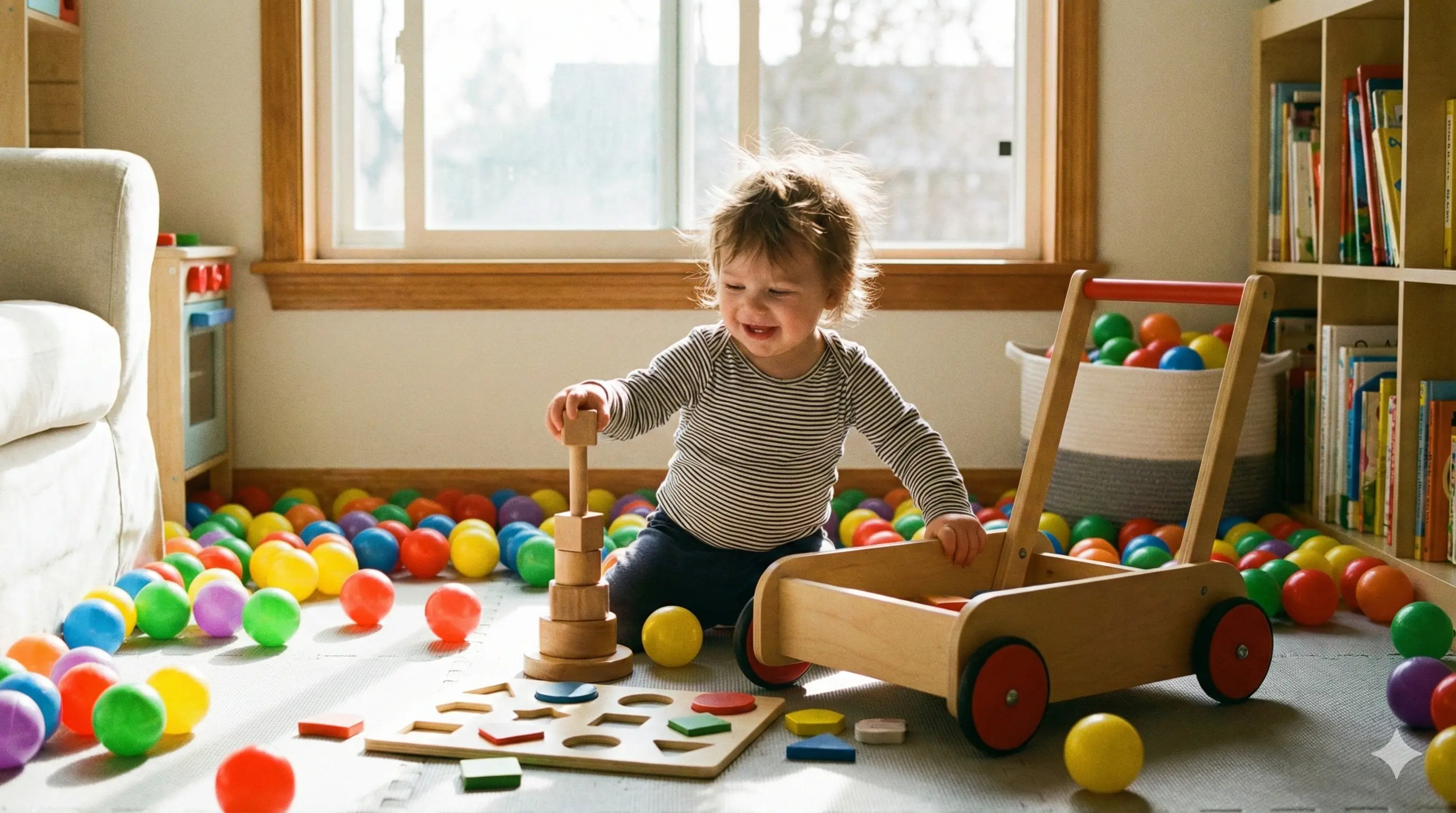
1-3 Year Motor Development Toys: Time to Move!
Your child is no longer a baby—they’re a curious explorer who rummages through everything, empties cabinets, and is constantly on the move! The 1-3 year period is a critical time when the foundations of children’s physical skills (motor development) are laid. Skills acquired during this period form the basis for everything from playing sports to writing in later years.
In this guide, we’ll examine in detail the toys and activities that will best support your child’s motor development.
What is Motor Development and Why is it Important?
Motor development is the acquisition of movement skills as a result of the coordinated work of muscles and the nervous system. This development is examined in two main categories:
- Gross Motor Skills: Movements using large muscle groups such as walking, running, jumping, and climbing
- Fine Motor Skills: Movements requiring small muscle groups and hand-finger coordination such as holding a pencil, buttoning, and using scissors
Between ages 1-3, the brain makes critical connections for movement control. Children supported with the right stimuli during this period gain advantages both physically and cognitively.
1-3 Year Development Periods
12-18 Months: First Steps Period
During this period, children:
- Begin walking with or without support
- Can bend down and pick up objects
- Can stack 2-3 blocks
- Can point with their index finger
- Try to hold a spoon (though not successfully yet)
18-24 Months: Exploration Period
During this period, children:
- Walk confidently, start running
- Can climb stairs (while holding on)
- Can kick a ball
- Stack 4-6 blocks
- Can hold a crayon and scribble
- Can open and close lids
24-36 Months: Mastery Period
During this period, children:
- Run, jump, can stand on one foot
- Can use a tricycle
- Stack 8-10 blocks
- Can draw horizontal and vertical lines
- Try to cut with scissors
- Can complete simple puzzles
Toys for Gross Motor Skills
Gross motor encompasses movements where the child uses their whole body, such as walking, running, jumping, and balancing. These toys are ideal for expending energy and developing body coordination:
Ride-On and Push Toys
Ride-On Toys
Wheeled cars or animal figures they propel by pushing with their feet strengthen leg muscles. Turning the steering wheel develops sense of direction and spatial awareness.
Selection criteria:
- Wide-based design well-balanced against tipping
- Child’s feet should comfortably reach the ground
- Sturdy plastic or metal chassis
- Soft contours without sharp edges
- CE certified and age-appropriate
Tip: For indoor use, quiet-wheeled models don’t make noise on hardwood and laminate floors and won’t disturb neighbors.
Push Walker Toys
Walkers they push while holding on are perfect for children just learning to walk. They provide both balance and confidence.
Caution: Sit-in walkers (baby walkers) are not recommended. Research shows that such walkers can delay natural walking development and increase accident risk.
Balls and Throwing Games
Balls of different sizes are indispensable for this age group. They can be used differently at each age:
For 12-18 months:
- Rolling large, light balls
- Reaching for ball while sitting
- Crawling/walking after the ball
For 18-24 months:
- Kicking ball with foot
- Simple catching attempts
- Throwing at target (large bucket or basket)
For 24-36 months:
- Catching and throwing
- Bouncing
- Simple ball games
Developmental benefits:
- Hand-eye coordination
- Foot-eye coordination
- Distance perception
- Strength control
- Social play skills
Pull-Along Toys
Wheeled toys that move when the string is pulled or that are dragged behind encourage the child to “follow” and walk. Classic telephone, dog, or duck pull toys have maintained their popularity for generations.
Why they’re effective:
- Ability to look backward while walking (coordination)
- Cause-effect relationship (if I pull, it comes)
- Beginning of imaginative play (walking the toy)
Climbing and Balance Toys
Children’s Slides
Small plastic slides suitable for indoor use offer both climbing and sliding activities. Ideal especially for winter months or days when going outside isn’t possible.
Balance Boards
Simple balance boards or half-cylinder rocker boards stimulate the vestibular system (sense of balance) and strengthen core muscles.
Tunnel Toys
Collapsible fabric tunnels are perfect for crawling and scooting activities. They also trigger imagination (cave, train tunnel, etc.).
Toys for Fine Motor Skills
Fine motor is the control of hand and finger muscles. These muscles need to strengthen for holding a pencil, tying shoes, eating, or playing piano in the future.
Building and Construction Toys
Large-Piece Blocks
Stacking large plastic or wooden blocks that pose no swallowing hazard requires serious focus and finger control.
Expectations by age:
- 12-18 months: 2-3 blocks stacked
- 18-24 months: 4-6 blocks stacked
- 24-36 months: 8-10 blocks stacked, simple structures
Developmental benefits:
- Grasping strength
- Release control
- Hand-eye coordination
- Spatial perception
- Patience and focus
Interlocking Blocks (Duplo-style)
Larger versions of classic LEGO blocks require both connecting and separating movements. This two-way activity works different muscle groups.
Shape Matching Toys
Shape Sorters
Trying to put the square in the square hole, the triangle in the triangle hole… This simple action helps the child recognize geometric shapes and develops problem-solving ability.
What they learn:
- Shape recognition
- Rotation and orientation
- Trial and error
- Sense of accomplishment
Puzzles
Appropriate puzzles for ages 1-3:
- 12-18 months: Single-piece puzzles with holding knobs
- 18-24 months: Simple 2-4 piece puzzles
- 24-36 months: 6-12 piece puzzles
Hand Skill Toys
Screwing and Turning Toys
Simple repair kits or twist-off caps develop wrist movements (pronation/supination). This movement is fundamental for daily activities like opening doors and jars.
Bead Threading
Threading beads with large holes made of wood or plastic using thick string is an excellent fine motor activity. It strengthens pincer grasp (thumb and index finger) skills.
Play Dough and Kinetic Sand
Play dough or kinetic sand are open-ended toys that strengthen hand muscles and support creativity.
Activity suggestions:
- Rolling (making balls)
- Flattening
- Tearing
- Shaping with molds
- Making holes with fingers
Practical Tips for Parents
How to Enrich Play?
Instead of just giving the toy and leaving, offer your child challenges:
For gross motor activities:
- “Can you throw the ball into the red bucket?”
- “Can you drive the car to the table?”
- “Can you come to me through the tunnel?”
- “Can you walk like a bear?” (Hands and feet on the ground)
For fine motor activities:
- “Can we stack the blue blocks to make the tallest tower?”
- “Can you put all the stars in the box?”
- “Can you open this lid?”
- “Can you make a ball from the dough?”
Organizing the Play Environment
- Create a safe, spacious play area
- Cover hard corners with soft protectors
- Place toys at a height the child can reach
- Don’t put out too many toys at once (overstimulation)
- Rotate: store some toys and periodically switch them out
When to Be Concerned?
Every child develops at their own pace. However, consulting a specialist may be helpful in these situations:
- Not walking yet at 18 months
- Unable to stack 2-3 blocks at 24 months
- Not using one side (right or left) at all
- Losing previously acquired skills
- Constantly walking on tiptoe with one hand or foot
Safety-First Selection
Material Safety
Children in the 1-3 age group may still put objects in their mouths. Therefore:
- Should not contain small parts: Swallowing and choking risk
- Should not contain magnets: Can cause serious internal organ damage if swallowed
- Battery compartment should be secure: Button batteries are especially dangerous
- Should not contain BPA and phthalates: May have hormonal effects
- Lead-free paint: Can affect nervous system development
Physical Safety
- Should not have sharp edges
- Parts should not easily break off
- Should not harm the child even if it falls on them
- Wheeled toys should have low tipping risk
Hygiene
Single-piece (monobloc) plastic toys:
- Are easy to clean
- Have fewer bacteria-collecting crevices
- Dry quickly
- Can be washed in the dishwasher (top rack)
Frequently Asked Questions
1. My child keeps playing with the same toy, should I be concerned? No, this is normal. Repetition is the foundation of learning. Doing the same activity many times reinforces the skill and develops mastery.
2. Is it a problem if I buy my daughter cars and my son doll toys? Definitely not a problem—in fact, it’s beneficial. Motor development is gender-independent. Various toys help the child acquire different skills.
3. Do electronic toys support motor development? Electronic toys based on passive watching don’t support motor development. However, electronic toys requiring active interaction like button pressing and turning can be beneficial for fine motor skills.
4. Are outdoor toys or indoor toys more important? Both are important and complement each other. Outdoors is ideal for larger movements (running, climbing), while indoors is suitable for more controlled fine motor activities. A balanced combination is best.
5. How many toys should there be? Quality is more important than quantity. Too many toys can cause overstimulation and distraction. 10-15 well-chosen toys used in rotation are sufficient.
Summary
The 1-3 year period is a golden window of opportunity for motor development. With the right toys and supportive environment:
For gross motor:
- Ride-on and push toys
- Balls
- Pull-along toys
- Climbing and slide sets
For fine motor:
- Large-piece blocks
- Shape sorters
- Puzzles
- Screwing and turning toys
- Play dough
At Erdem Toys, we support your child’s healthy development with our CE certified products designed specifically for the 1-3 age group and compliant with safety standards.
This guide has been prepared in accordance with child development experts’ recommendations. Every child is different; developmental stages may show individual variations. If you have concerns, we recommend consulting a child development specialist.