6cm, 7cm, and 9cm: Which Size Is Right for Which Ball Pit?
How does size selection affect your budget when filling a ball pit? Volume comparison and use cases for 60mm, 70mm, and 90mm balls.
6cm, 7cm, and 9cm: Which Size Is Right for Which Ball Pit?
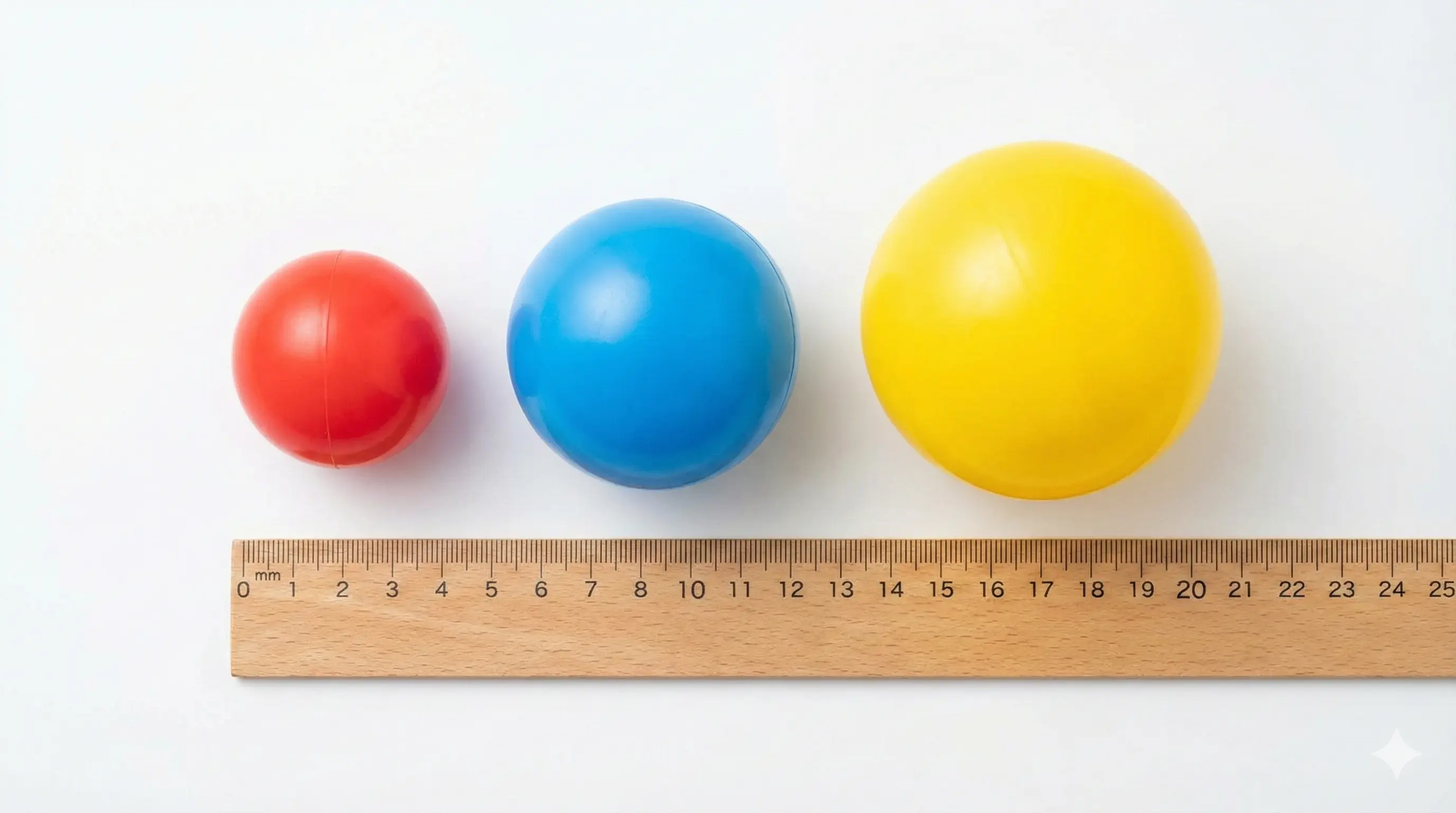
The biggest confusion when buying ball pit balls is size selection. Although there appears to be only a 1cm difference between 6cm and 7cm, there are significant differences in terms of filling costs and the volume occupied.
In this guide, we’ve prepared a technical comparison to help you choose the most suitable size for your needs.
Why Does Size Matter?
Size selection in ball pit balls isn’t just an aesthetic preference. The right size:
- Affects safety (according to the child’s age)
- Determines cost (how many balls you need to buy)
- Shapes the experience (ease of gripping, visual fullness)
- Limits the usage area (home vs. commercial)
Sphere Volume Mathematics
A sphere’s volume is calculated with this formula:
V = (4/3) × π × r³
This formula shows that volume increases cubically as diameter increases. So a 1cm difference in diameter creates a much larger difference in volume.
Volume Comparison
| Diameter | Radius | Volume | Compared to 7cm |
|---|---|---|---|
| 6cm | 3cm | ~113 cm³ | 63% |
| 7cm | 3.5cm | ~180 cm³ | 100% (Reference) |
| 9cm | 4.5cm | ~382 cm³ | 212% |
According to this table:
- A 7cm ball occupies 60% more volume than a 6cm one
- A 9cm ball occupies more than 2 times the volume of a 7cm one
1. 6cm (60mm) Balls
The smallest standard size in the market. Often also called “mini balls” or “baby balls.”
Physical Characteristics
- Diameter: 60mm (±2mm tolerance)
- Weight: Approximately 8-12 grams
- Volume: ~113 cm³
Use Cases
Ideal For:
- Babies 0-12 months for grasping
- High chair trays
- Small baby bathtubs
- Sensory play boxes
- Montessori activities
Not Suitable For:
- Large inflatable pools
- Commercial play areas
- Children over 3 years (too small)
Advantages
- Ideal grip for baby hands: Small hands can easily wrap around
- Lightweight: Won’t cause harm when thrown
- Low unit price: Generally the cheapest option
Disadvantages
- Requires many more: 40-50% more balls needed to fill the same area
- Getting lost risk: Gets under couches, behind cabinets
- Visually “sparse”: Pool doesn’t look full
- Mixes up more easily: Small balls scatter everywhere
How Many Do You Need?
| Pool Size | Required 6cm Balls |
|---|---|
| 90×30cm (Mini) | ~200-250 pieces |
| 120×30cm | ~400-500 pieces |
| 150×40cm | ~800-1000 pieces |
2. 7cm (70mm) Balls – Standard Size
The most common size preferred by home play parks, inflatable pools, and many commercial establishments. Considered the “gold standard.”
Physical Characteristics
- Diameter: 70mm (±2mm tolerance)
- Weight: Approximately 12-18 grams
- Volume: ~180 cm³
Use Cases
Ideal For:
- All children 1 year and older
- Home ball pits
- Daycares and kindergartens
- Small to medium-sized mall play areas
- Kids’ cafes
- Birthday parties
Not Suitable For:
- Babies under 6 months (gripping difficulty)
- Very large commercial pools (9cm may be more economical)
Advantages
- Universal size: Suitable for all ages
- Best price/performance ratio: Volumetrically efficient
- Easy to find: Available at all sellers
- Full look: Creates a rich, solid appearance in the pool
- Standard: Parts and accessories are designed for this size
Disadvantages
- Too big for very small hands: 6-9 month babies may struggle
- Medium unit price: Slightly more expensive than 6cm
How Many Do You Need?
| Pool Size | Required 7cm Balls |
|---|---|
| 90×30cm (Mini) | ~150-200 pieces |
| 120×30cm | ~300-350 pieces |
| 150×40cm | ~600-700 pieces |
| 200×50cm | ~1500-2000 pieces |
3. 9cm (90mm) Balls – Jumbo Size
The “large” balls typically seen in big commercial ball pits at shopping malls. Designed for professional use.
Physical Characteristics
- Diameter: 90mm (±2mm tolerance)
- Weight: Approximately 20-28 grams
- Volume: ~382 cm³
Use Cases
Ideal For:
- Large mall play areas
- Professional entertainment centers
- Deep pools (50cm+)
- Large square footage areas
- Adult events
Not Suitable For:
- Home-type small pools (few balls fit)
- 1-2 year old children (hard to grip with one hand)
- Shallow pools (balls overflow)
Advantages
- Quick filling: Full look with fewer pieces
- Easy cleaning: Large balls clean faster
- Durability: Thick walls, longer lifespan
- Professional appearance: Aesthetic in commercial areas
Disadvantages
- Gripping difficulty: Small children can’t hold with one hand
- High unit price: Each ball is more expensive
- Storage: Requires more space
- Difficult for home use: Doesn’t fit in small pools
How Many Do You Need?
| Pool Size | Required 9cm Balls |
|---|---|
| 150×40cm | ~350-400 pieces |
| 200×50cm | ~800-1000 pieces |
| 300×60cm (Commercial) | ~2000-2500 pieces |
Comparison Summary Table
| Feature | 6cm (60mm) | 7cm (70mm) | 9cm (90mm) |
|---|---|---|---|
| Ease of Gripping | Very Easy (Babies) | Ideal (General) | Difficult (Small children) |
| Pool Filling Speed | Slow (Many needed) | Medium/Good | Fast |
| Unit Price | Low | Medium | High |
| Total Cost | Medium-High | Low-Medium | Medium |
| Recommended Age | 0-2 years | 1+ years | 3+ years |
| Recommended Use | Baby pools | Home & Daycares | Commercial Areas |
| Storage Ease | Easy | Medium | Difficult |
| Cleaning Ease | Difficult | Medium | Easy |
Cost Analysis: Which Is More Economical?
At first glance, the unit price of 6cm balls appears cheaper. But to understand the real cost, you need to look at total expenditure.
Example Scenario: 120×30cm Pool
Let’s say these prices apply:
- 6cm ball: $0.40/piece
- 7cm ball: $0.50/piece
- 9cm ball: $0.70/piece
| Size | Required Quantity | Unit Price | Total Cost |
|---|---|---|---|
| 6cm | 450 pieces | $0.40 | $180 |
| 7cm | 320 pieces | $0.50 | $160 |
| 9cm | 200 pieces | $0.70 | $140 |
In this example, 9cm appears most economical. However, 9cm balls would be too large for this pool and wouldn’t look aesthetic. Therefore, 7cm is the most sensible choice in terms of price/performance balance.
Long-Term Cost
Look not just at initial purchase cost, but also at:
- Loss rate: Small balls get lost more
- Durability: Larger balls are generally thicker
- Replacement: How often will you need to replace them?
Questions for Choosing the Right Size
Answer these questions before deciding:
1. How old is your child?
- 0-12 months: Choose 6cm
- 1-3 years: 7cm is ideal
- 3+ years: 7cm or 9cm
2. How big is your pool?
- Mini pool (under 90cm): 6cm or 7cm
- Medium pool (90-150cm): 7cm
- Large pool (150cm+): 7cm or 9cm
3. How deep is the pool?
- 20-30cm (8-12 inches): 6cm or 7cm
- 30-50cm (12-20 inches): 7cm
- 50cm+ (20+ inches): 9cm
4. What’s your budget?
- Limited: 7cm (best price/performance)
- Medium: 7cm or mixed size
- High: Any size you want
5. Frequency of use?
- Daily/Intensive: Quality 7cm (durability matters)
- Weekly: Standard 7cm
- Rarely: 6cm (lower cost)
Mixing Sizes: Can It Be Done?
Using different sizes in the same pool is possible and has some advantages:
Advantages
- Visual variety
- Suitable for children of different ages
- Richer sensory experience
Disadvantages
- Irregular appearance
- Small balls sink to the bottom
- Cleaning becomes harder
Recommendation
If you’re going to mix, prefer adjacent sizes:
- 6cm + 7cm → ✓ Compatible
- 7cm + 9cm → ✓ Compatible
- 6cm + 9cm → ✗ Too different
Erdem Toys Size Options
With over 30 years of experience, we produce ball pit balls for every need:
- 6cm Balls: For baby pools and sensory play
- 7cm Balls: The most popular choice for homes and daycares
- 9cm Balls: For commercial areas and large projects
All our sizes are EN71 certified, made from BPA-free original raw materials. We offer special pricing and color options for wholesale orders.
To get consultation on size selection, you can reach us through our contact page.
Frequently Asked Questions
Which size should we choose for our daycare?
Since daycares have different age groups, 7cm is the safest choice. It’s suitable for both 1-year-olds and 5-year-olds.
My home pool is 100x100cm, how many balls do I need?
For a 100x100x30cm pool, we recommend approximately 400-500 pieces of 7cm balls. If you want sparser filling, 300 pieces may be sufficient.
How can I tell the size when buying balls online?
It’s indicated as “diameter” in product descriptions. 6cm = 60mm, 7cm = 70mm format may also be used. If in doubt, ask the seller.
Do different brands produce the same sizes?
No, there may be ±2-3mm tolerance differences. One brand’s 7cm might be another’s 6.8cm. Sticking with the same brand ensures visual consistency.
Conclusion
When choosing ball pit balls, size is a critical factor:
- For babies: 6cm
- For general home use: 7cm (most recommended)
- For commercial areas: 9cm
The right size selection protects both your child’s safety and your budget. Remember, the cheapest unit price doesn’t always mean the most economical total cost.
This guide has been prepared to help you make informed decisions about ball pit ball size selection. Contact us with your questions.