What is EN71? Why Toy Safety Standards Matter
How do you know if the toy you're buying is safe? A comprehensive guide about CE marking, EN71 tests, and chemical details to pay attention to for child health.
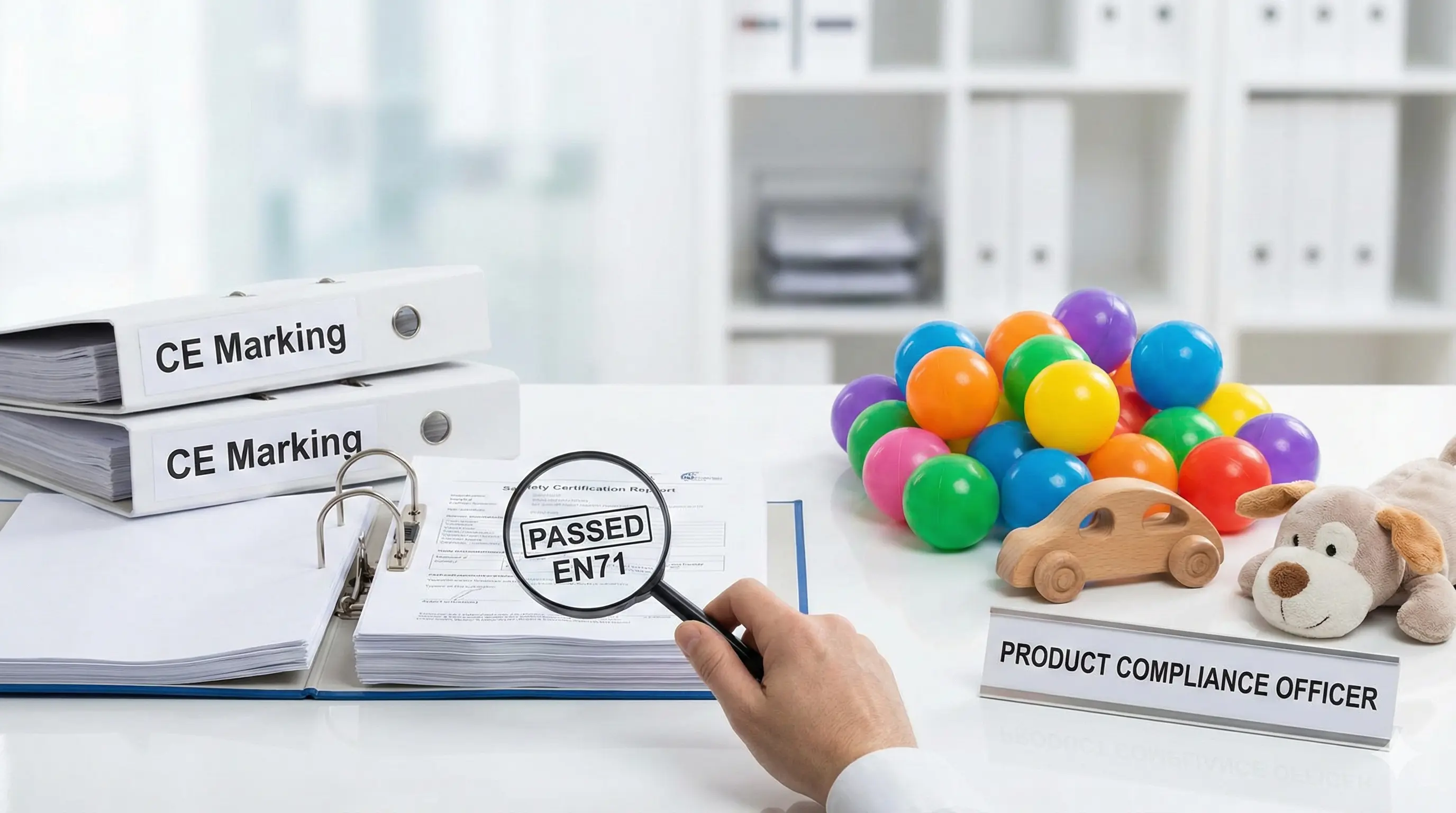
What is EN71? Toy Safety Standard
As a parent, the first question on your mind when choosing toys is probably: “Is this toy safe for my child?” With countless options in the market, it can be difficult to distinguish the safe ones. This is where CE Marking and EN71 Standards come into play.
In this article, we’ll explain what toy safety means and what you need to look out for, without getting lost in technical jargon.
What is EN71?
EN71 is a comprehensive set of safety tests that all toys sold in European Union countries (and in Turkey under harmonization laws) must pass. A toy cannot legally be sold as a “Toy” without passing these tests.
This standard examines toys not only in terms of “durability” but from many chemical and physical aspects. Thousands of toys are subjected to these tests in Europe every year, and those that fail are recalled from the market.
History of EN71 Standards
The EN71 standard was first established in 1988 and has been continuously updated since then. With the EU’s 2009/48/EC Toy Safety Directive, these standards became even stricter. Turkey has adopted these standards under the Customs Union agreement.
What Do EN71 Tests Cover?
A standard plastic or plush toy goes through these stages:
EN71-1: Mechanical and Physical Properties
This is the most comprehensive test measuring the toy’s breakage risk and physical safety. This test seeks answers to these questions:
- Does a sharp piece emerge when the toy falls to the ground?
- Do small enough parts for a child to swallow break off? (Especially critical for under 3 years)
- Are the stitches on plush toys sturdy?
- Are strings and cords long enough to pose a strangulation risk?
- Are the toy’s edges sharp?
- Are there gaps where a child’s finger could get stuck?
Important: For toys produced for children under 3 years, a “small parts test” is applied. This test checks whether any part of the toy passes through a standard test cylinder (diameter 31.7mm or 1.25 inches). Parts that pass pose a choking hazard.
EN71-2: Flammability
This measures how the toy responds when exposed to fire. This test is especially critical for fabric toys, costumes, and hair accessories.
A safe toy, when in contact with fire:
- Should not ignite “with a flash”
- Flame spread rate should be very low
- Should be able to self-extinguish
These properties buy time for the child to escape or for adults to intervene in case of a possible accident.
EN71-3: Chemical Migration (Heavy Metals)
This is one of the most critical tests and directly affects child health. Children lick, bite, or suck on toys. This test measures whether harmful substances in the toy’s plastic or paint mix with the child’s saliva.
Substances tested include:
- Lead (Pb): Can cause nervous system damage
- Mercury (Hg): Affects kidney and brain function
- Arsenic (As): A known carcinogen
- Cadmium (Cd): Can cause bone and kidney damage
- Chromium (Cr): Can cause allergy and skin irritation
- Antimony (Sb): Can cause nausea and vomiting
- Barium (Ba): Can cause heart rhythm disorders
- Selenium (Se): Shows toxic effects at high doses
EN71-9, 10, 11: Organic Chemical Compounds
These more recently added sections set limit values for phthalates (plastic softeners), formaldehyde, and other organic compounds. Especially in PVC-containing toys, the phthalate ratio should not exceed 0.1%.
What Does the CE Mark Mean?
The CE letters (Conformité Européenne - European Conformity) you see on products are the manufacturer’s declaration that:
“I produced this toy in compliance with all health, safety, and environmental protection requirements and had the necessary tests conducted.”
Things to Know About the CE Mark
- It is not a quality certificate: The CE mark does not guarantee that the toy is very fun or unbreakable.
- It is a safety guarantee: It shows that the toy is not harmful to health and meets basic safety requirements.
- It is a legal requirement: Toys without CE marking cannot legally be sold in Europe and Turkey.
- It is manufacturer responsibility: The mark declares that the manufacturer is responsible for product safety.
Beware of Fake CE Marks!
Unfortunately, there are products with fake CE marks in the market. In the genuine CE mark, the spacing between letters is specific measurements. Some products from China may use a visually similar but invalid mark meaning “China Export.”
Toy Safety in Turkey
Turkey has adopted EN71 standards under its Customs Union agreement with the European Union. The Ministry of Trade and TSE (Turkish Standards Institute) conduct regular market inspections.
Inspection Process
- Tests are conducted in accredited laboratories
- Non-compliant products are recalled from the market
- Administrative fines can be applied to manufacturers
- In serious cases, production and sales can be banned
What Should Parents Pay Attention To?
1. Label Check
- Always look for the CE mark
- Manufacturer or importer information should be present
- Age warning should be clearly stated
- Avoid nameless, brandless, and unlabeled loose plastic toys
2. Smell Test
If there’s a stinging, very heavy chemical/plastic smell when you take the toy out of its package, be careful. This smell may be a sign of:
- Excessive phthalate use
- Low-quality plastic raw material
- Inadequately ventilated production
Leave strongly scented toys in open air for a few days or don’t use them at all.
3. Age Warning
Use toys with “Not suitable for 0-3 years” (or sad baby face symbol) carefully in homes with younger siblings. This warning usually indicates:
- Contains small parts
- Contains long string or cord
- May have sharp edges
4. Purchase Location
- Shop from reliable stores
- Review seller ratings for online shopping
- Be suspicious of very cheap prices
- Prefer products in original packaging
Erdem Toys and Safety Standards
With over 30 years of experience, we have always prioritized safety. All our products:
- Are 100% EN71 compliant manufactured
- Are made from BPA-free plastics
- Use non-toxic paints
- Are regularly tested in accredited laboratories
- Bear the CE mark and meet legal requirements
Every toy we make is produced with the confidence we would give to your child.
Conclusion
A safe toy doesn’t just mean an expensive or wooden toy. Plastic toys produced according to standards and certified are also extremely safe, hygienic, and economical. What matters is asking the right questions as a conscious consumer and checking the labels.
Keep this guide in mind when choosing safe toys for your children. Don’t hesitate to contact us with your questions.
This guide has been prepared for informational purposes about EN71 standards and toy safety. We recommend following the Ministry of Trade and TSE resources for current regulations.